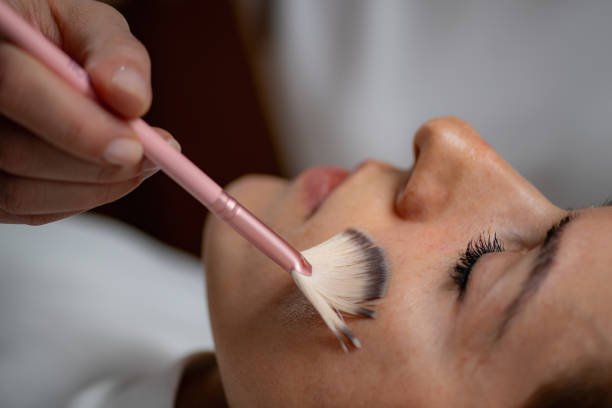
Chemical peels are advanced, professional exfoliation treatments that use carefully formulated acids to gently remove dull, damaged, or dead skin cells from the surface. By stimulating controlled skin renewal, these treatments reveal a brighter, smoother, and more radiant complexion while improving overall skin health.
Beyond superficial exfoliation, chemical peels work at a cellular level to encourage collagen production, improve elasticity, and refine texture. The result is not only immediate radiance but also long-term rejuvenation, helping the skin maintain a youthful, healthy appearance over time.
Our chemical peels are fully customizable, with different formulations and strengths tailored to your unique skin type and concerns.
Whether used as part of a regular maintenance routine or for targeted rejuvenation, chemical peels provide a safe, effective, and clinically proven solution to help your skin look smoother, fresher, and more luminous. With professional oversight, treatments can be adapted to suit sensitive or more resilient skin, ensuring optimal results and minimal downtime.
Chemical peels are a professional exfoliation treatment that offers multiple skin benefits by removing dead, damaged surface cells and stimulating cellular renewal. Key benefits include:
Improves skin texture and smoothness by eliminating dull, rough surface cells
Reduces fine lines and wrinkles, particularly around the eyes and mouth
Evens skin tone and reduces pigmentation including sunspots, melasma, and post-inflammatory marks
Minimizes the appearance of acne scars and blemishes
Unclogs pores and reduces breakouts, promoting clearer skin
Stimulates collagen production, supporting long-term skin firmness and elasticity
Enhances radiance, giving a brighter, more youthful complexion
Boosts the effectiveness of other skincare treatments by improving product absorption
Chemical peels can be tailored to different skin types and concerns, providing a versatile solution for rejuvenation, anti-aging, and overall skin health.
MediMD peels are a range of medical‑grade chemical skin peels formulated to gently exfoliate the outer layers of skin, stimulate regeneration deep in the dermis, and reveal smoother, brighter, healthier skin. Each MediMD formula is developed for different skin needs and skin types; by selecting the appropriate peel strength and active acids, treatments can be tailored to address specific concerns—such as pigmentation, acne, uneven tone, sun damage, fine lines, or dullness. Superficial exfoliation with little or no downtime leaves you with fresh, radiant skin.
Glycolic Acid Peel (Resurfacing MediPeel) — often at 20% or 40% strength: helps reduce hyperpigmentation, smooth fine lines and wrinkles, even out skin tone and texture.
Lactic Acid Peel (Rejuvenating MediPeel) — gentle exfoliation and deep hydration, ideal for dull or dry skin, improving tone and stimulating collagen production.
Salicylic Acid Peel (acneMED MediPeel) — targets acne-prone or oily skin: exfoliates, regulates oil production, reduces pore size, helps with acne and acne scarring.
Modified Jessner or Multi-Acid Peels — combining acids such as glycolic, lactic, and kojic acids to address pigmentation, sun damage, uneven tone, acne, and signs of ageing.
TCA‑based Peel (TCA 10% MediPeel) — for more intensive exfoliation; suited to deeper texture irregularities, pigmentation issues or sun-damaged skin (when appropriately assessed
BioRePeel is a medical peel with bio stimulating, revitalising and peeling actions, with trichloroacetic acid ( TCA ) as the main ingredient. It promotes cell turnover by removing the outer corneal layer cells with selective action on corneocytes’ junction bonds. It has 14 active ingredients that contribute to a profound stimulation of skin replication and biosynthetic process, essential to counteract the effects of skin ageing from sunlight and the environment. It contains 35% of TCA. It’s Hydrophilic phase: its bio stimulating and revitalising actions promotes exfoliation, reduces fine lines & helps battle acne, enlarged pores & comedones. It’s Lipophilic Phase : has stabilising and protective actions, reduces trans-epidermal water evaporation and it increases overall hydration.
BioRePeel has virtually no downtime, allowing you to return to your normal activities immediately. While you can resume your day right away, some mild side effects may include tightness, a feeling of sensitivity, and potentially some very light peeling for a few days.
Perfect Peel Super blend Pro is designed to provide results at both medium and superficial depths, while minimizing downtime and risk compared to a more intensive peel. This treatment uses a blend of antioxidants, acids, and other ingredients like glutathione to address concerns such as skin brightening, hyperpigmentation, fine lines, and sun damage. The downtime for the Perfect Peel Super blend is approximately seven days, with peeling typically starting around day three and finishing by day seven. During this time, your skin will feel tight and may darken before significant peeling begins, and you must avoid sun exposure and picking at your skin.
During the downtime
Days 1–2: Your skin will feel tight, appear darker, and the peel solution must remain on for at least six hours.
Days 3–5: Peeling begins. You may feel some discomfort, irritation, or itching.
Days 5–7: Most peeling is completed. Your skin will feel dry and flaky, but you should not pick or pull at your skin.
At-Home Care: Includes a home kit with essential products to support healing and maximize results.
Results: Visible improvements in texture and tone within a week, with optimal results seen by day 28.
Chemical Peels can be used on the face, neck, décolletage and hands. They can also be used on the body.
Body peels are formulated to be more powerful than facial peels because the skin on the body is thicker, though specific formulations are chosen based on the treatment area and skin condition. Common areas treated include the back, chest, arms, legs, and hands.
You can try a single peel, however a course is more beneficial. Usually a series of 3-4 are recommended for best results. Superficial peels can be done every 2–6 weeks
15-45 minutes
Avoid Sun Exposure: Minimise sun exposure and tanning for 1–2 weeks prior to treatment; use broad-spectrum SPF daily.
Discontinue Certain Skincare Products: Stop retinoids, strong acids (AHA/BHA), or exfoliating products 3–7 days before your peel.
Avoid Waxing or Hair Removal: Do not wax, use depilatory creams, or have laser treatments on the area 48 hours prior.
Avoid Blood-Thinning Medications: If possible and cleared by your doctor, avoid aspirin, ibuprofen, or other blood-thinning medications for 2–3 days to reduce bruising.
Hydrate: Drink plenty of water and maintain a healthy skincare routine leading up to your peel.
Disclose Medical History: Inform your provider of any allergies, skin conditions, medications, or recent cosmetic procedures.
Avoid Recent Procedures: Do not schedule a peel if you have had recent dermabrasion, microneedling, or laser resurfacing unless cleared by your practitioner.
Clean Skin: Arrive with a clean, makeup-free face to allow proper application of the peel.
Before the treatment, we start your appointment with a consultation to assess your areas of concern. Skin is then cleansed and prepared for the peel. Then the treatments are finished with calming aftercare and SPF.
None to minimal discomfort, a mild prickling sensation.
After a peel, you will find that your skin is red and it might be a little tight or sore. You may also notice some peeling and flaking of skin, depending on the strength of the solution in the peel.
However, in a few days your new skin will come through and you will be looking radiant and glowing!
Recovery times will vary depending on type and strength of peel. To ensure optimal results and prevent complications, follow these aftercare guidelines after your chemical peel:
Avoid Sun Exposure: Protect your skin with broad-spectrum SPF 30+ for at least 2 weeks; avoid tanning beds and direct sunlight.
Do Not Pick or Peel Skin: Allow flaking or peeling to occur naturally to prevent scarring or hyperpigmentation.
Gentle Skincare Only: After 24 hours Use mild, hydrating cleansers and moisturizers; avoid retinoids, acids, or exfoliants until fully healed. Gently wash areas with cool water and pat dry
Hydrate: Drink plenty of water and maintain skin hydration with gentle moisturizers.
Avoid Heat & Sweat: No saunas, steam rooms, hot baths, or strenuous exercise for 48–72 hours.
Avoid Makeup: If possible, avoid makeup for the first 24 hours, especially on sensitive areas.
Do Not Scratch or Rub: Avoid rubbing the treated area to prevent irritation or damage.
Expect Mild Reactions: Temporary redness, swelling, or tingling is normal and typically resolves within a few days.
Apply sunscreen with SPF30 or more
Use of prescription topicals should be avoided for 3-5 days
Optimal results are achieved with clients who continue treatments routinely.
Follow-Up: Attend any scheduled follow-up appointments to assess healing and results.
Improvements are seen almost immediately. However, results will continue to improve as the new skin is revealed
The type of peel you should have depends on the results you are hoping for and the issues you have with your skin. Peels of different depths and strengths are used to get the desired results. We will fully assess your skin first, to choose the right peel for your skin concerns.
A peel is a fantastic way to achieve new glowing skin, but you do need to keep a few things in mind.
You should avoid the sun before and after your peel. We advise SPF 50 all year round, but especially for the first 4 weeks after a peel when the skin is more susceptible to damage.
If you’re going on holiday we recommend you have the treatment after and not before.
Depending on your skin concerns, you may need a course of peels to achieve optimal results.
Pregnancy or breastfeeding
Active skin infections (bacterial, viral, or fungal) in the treatment area
Open wounds, cuts, or abrasions
Severe eczema, psoriasis, or dermatitis flare-ups
History of keloid or hypertrophic scarring
Recent facial procedures such as laser resurfacing, dermabrasion, or microneedling that have not fully healed
Use of photosensitising medications (e.g., certain antibiotics, retinoids, or chemotherapy drugs)
Uncontrolled diabetes or medical conditions affecting healing
Active cold sores or herpes simplex virus (for superficial peels, antiviral prophylaxis may be required)
Allergy or hypersensitivity to any component of the peel solution
Severe cardiovascular or autoimmune conditions that may affect skin recovery