fibroblast plasma pen

Plasma Fibroblast is an advanced, non-surgical skin-tightening treatment that uses controlled plasma energy to create precise micro-injuries on the skin’s surface. This stimulates fibroblast activity, triggering a natural cascade of collagen production, tissue contraction, and cellular renewal. Ideal for lifting, smoothing, and refining areas of lax or crepey skin, this treatment offers a luxurious yet highly effective alternative to more invasive procedures—delivering firmer, tighter, and more rejuvenated skin with long-lasting results.

This treatment is particularly effective for areas prone to laxity or crepiness, such as the eyelids, neck, jawline, and fine lines around the mouth. By harnessing the skin’s natural healing processes, Plasma Fibroblast offers a refined, high-performance alternative to surgery or more invasive procedures, without the associated downtime or risks. The result is a smoother, tighter, and more youthful appearance with improved texture and long-lasting rejuvenation—delivered through a sophisticated, science-driven approach that enhances your skin’s structure from within.

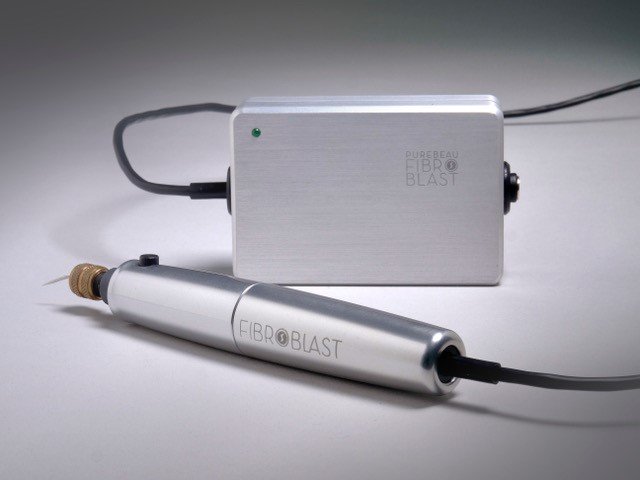


Fibroblast Plasma Pen

Benefits Of Plasma Pen

Tightens and lifts loose or crepey skin without surgery

Stimulates fibroblast activity for long-term collagen and elastin production

Smooths fine lines, wrinkles, and textural irregularities

Improves skin firmness, elasticity, and overall structure

Reduces hooded eyelids and rejuvenates the eye area

Refines lines around the mouth, neck, and jawline

Minimally invasive with targeted precision and controlled energy

Delivers natural-looking, long-lasting results

Minimal downtime compared to surgical alternatives

Safe for small, delicate, or hard-to-treat areas

How Does the Plasma Pen Work?

Plasma Arc and Sublimation: The device generates a small electrical arc (plasma energy) just above the skin’s surface without touching it. This causes a process called sublimation, instantly vaporizing the superficial skin cells (turning solid tissue directly into gas) and creating a targeted, controlled micro-injury, or “carbon dot”.

Thermal Disruption: The heat from the plasma arc creates a zone of thermal modification and disruption in the deeper dermal layer of the skin. This controlled trauma is key to stimulating the body’s repair mechanisms.

Fibroblast Activation: The primary scientific goal is to activate fibroblast cells located in the dermis. These cells, typically dormant in adults, are responsible for producing the structural proteins collagen (specifically type I and III) and elastin.

Healing Cascade and Growth Factors: The micro-trauma initiates an inflammatory response, attracting immune cells and triggering the release of essential growth factors and cytokines, such as Platelet-Derived Growth Factor (PDGF) and Transforming Growth Factor-beta (TGF-β). These signal to the fibroblasts that repair is needed.

Neocollagenesis and Remodeling: The activated fibroblasts proliferate and begin synthesizing new collagen and elastin fibers to replace the damaged tissue. Initially, type III collagen is produced and eventually replaced by stronger type I collagen over several weeks to months, physically remodelling the skin’s structure and increasing its thickness, strength, and elasticity.

This entire process makes the skin firmer and tighter, improving texture, tone, and laxity, with results that can last for years because new, healthy tissue has been formed.

Frequent Questions

What Are The Treatment Areas

Upper eyelids (non-surgical blepharoplasty)

Under-eye area

Crow’s feet

Forehead lines

Frown lines (11s)

Nasolabial folds

Upper lip lines (smoker’s lines)

Lower face and jawline

Neck and décolletage

Stomach (mild skin laxity)

Knees and elbows (crepey skin)

Scars and small skin textural irregularities

Usually 1 is all that’s necessary. 

60–90 minutes, depending on the size of the area being treated and the number of plasma points required. Smaller areas like the eyelids or upper lip may take around 30–45 minutes, while larger areas such as the neck or abdomen may require up to 90 minutes for precise, controlled application.

If you have a virus/cold/flu reschedule appt.

Do not wear contact lenses on the day of your procedure.

Avoid sun/sunbed exposure/sun burn/ tanning/ spray tanning up to 8 weeks prior to procedure.

Discontinue use of Retinols, Retinoids, Glycolic Acid, Alpha Hydroxy Acid, Vitamin C, or any anti-aging products 2 weeks prior to procedure.

Remove eyelash extensions prior to treatment in eye area and do not reapply for 8 weeks.

Wait 12 months following isotretinoin use. (Accutane).

In the few weeks prior to your treatment, AVOID any other treatments in the area such as lasers, chemical peels, fillers, micro needling, etc. as these may prevent you from receiving a Plasma Pen treatment at our appointment time.

Wait 21 days after Dermal filler, Botox, dermabrasion & IPL

Do not wax, thread, or use depilatory creams 72 hours before procedure.

AVOID smoking and excessive alcohol intake, as these have negative effects on collagen formation.

We recommend supplementing your diet with Vitamins C, A, E, Magnesium, Copper, Iron and Zinc for 2 weeks prior to your treatment.

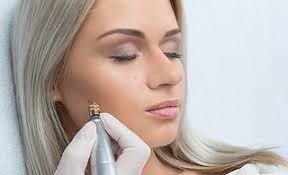
Before the treatment, we start your appointment with a consultation to assess your areas of concern. Numbing cream is applied to treatment areas. During the treatment, tiny plasma points are applied to the skin, creating a grid of micro-injuries that immediately contract the tissue. Numbing cream is used to ensure comfort. 

Mild to moderate discomfort, as the plasma points create controlled micro-injuries on the skin’s surface. To ensure a comfortable experience, a topical numbing cream is applied before the procedure, significantly reducing sensation. Most clients describe the feeling as a brief, warm, tingling or pricking sensation. Any residual heat or tightness afterward is usually mild and temporary, settling within a few hours.

Numbing cream 

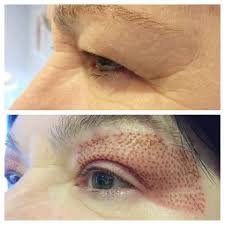
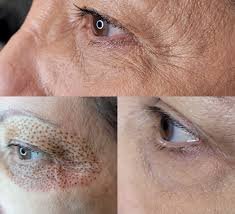
Following treatment, the area will feel warm and may appear red and swollen, with small carbon crusts remaining for 7-10 days as the skin begins to heal and regenerate. 

Detailed aftercare instructions will be provided after treatment.

Final results from a Plasma Fibroblast treatment typically develop over 8–12 weeks, as collagen and elastin production increases and the skin continues to tighten and remodel. While some initial tightening can be seen immediately, the most significant improvements appear gradually as the deeper layers of the skin regenerate. Results can continue to refine for up to 12–16 weeks after the procedure.

Common temporary effects include redness, swelling, tightness, and small crusts that naturally flake away. Mild discomfort or heat sensation is normal. Rare risks include hyperpigmentation, scarring, prolonged redness, or infection—most often prevented with proper pre- and post-care.